ParcelSCAN
Computer Vision Scan Tunnel

A Scan Tunnel That Goes Beyond Just Reading Barcodes and Provides Inventory Intelligence for Your Parcels and Packages

Conventional scan tunnels that dominate the market today run on machine vision, a technology built for the rigid, identical items of a production line that stumbles on real parcels in warehouses and DCs: a new carrier label, an odd placement, a torn barcode, a dented box become exceptions the system pulls off the line for a person to handle.

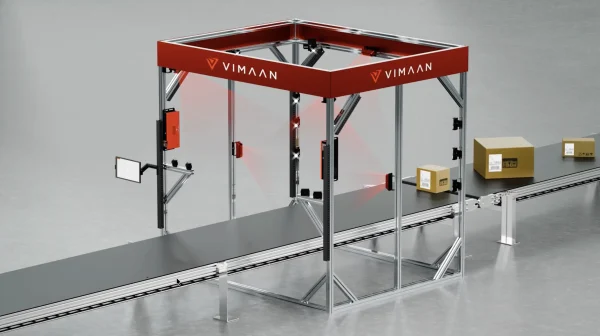
ParcelSCAN is a scan tunnel built for inventory intelligence through AI & computer vision instead. It does everything a conventional scan tunnel can do for parcel and package scanning across receiving, shipping and returns, and goes beyond as it “understands” each parcel rather than just reading barcodes or matching parcels against pre-configured rules. And, it costs less than a conventional scan tunnel.

Computer Vision Scan Tunnel

Conventional scan tunnels that dominate the market today run on machine vision, a technology built for the rigid, identical items of a production line that stumbles on real parcels in warehouses and DCs: a new carrier label, an odd placement, a torn barcode, a dented box become exceptions the system pulls off the line for a person to handle.

ParcelSCAN is a scan tunnel built for inventory intelligence through AI & computer vision instead. It does everything a conventional scan tunnel can do for parcel scanning across receiving and shipping, and goes beyond as it “understands” each parcel rather than just reading barcodes or matching parcels against pre-configured rules. And, it costs less than a conventional scan tunnel.

How ParcelSCAN Works

Capture Reality 1

Capture Reality

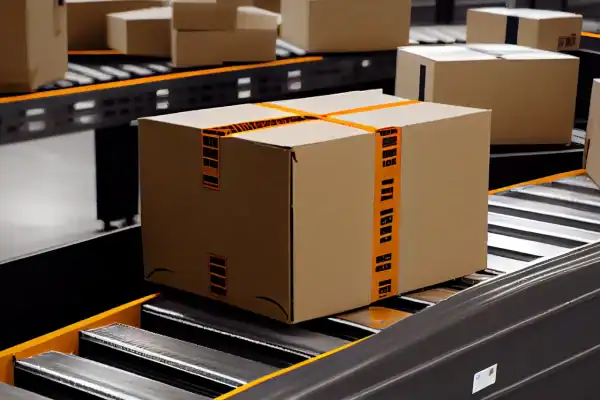
Multiple cameras mounted on the scan tunnel capture each parcel and package from one to all six sides (depending on the customer requirements) as it moves through the tunnel on your conveyor: barcodes, labels, dimensions and condition, in one pass.

Interpret Data 1

Interpret Data

Proprietary AI and computer vision models read every barcode, fall back to OCR and label attributes when a barcode is damaged or unreadable, detect damage and measure dimensions, turning each parcel and package into structured data.

Get Insights Act 1

Get Insights & Act

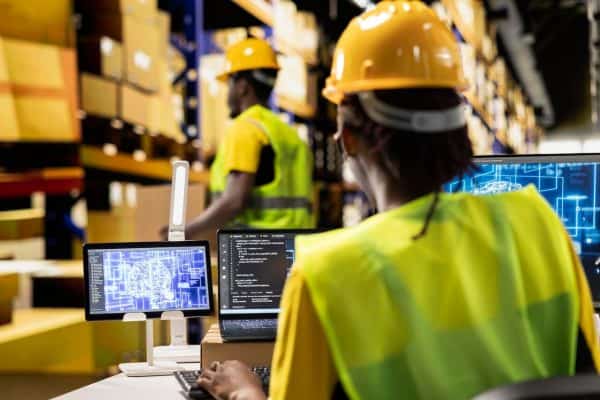
Advanced analytics reconcile every parcel and package against your WMS or order in real time, flag anomalies as they happen, and archive a timestamped image of every parcel and package in ViewDECK, our visualization platform.

ParcelSCAN (Computer Vision Scan Tunnel) vs. Machine Vision Scan Tunnel

ParcelSCAN looks like a traditional scan tunnel and uses the same full-frame capture. What makes it far more capable is the underlying technology: AI and computer vision, not rules-driven machine vision. See the difference for yourself:
Criteria Machine Vision Scan Tunnel Computer Vision Scan Tunnel
(ParcelSCAN)
Best suited for Standardized packaging, consistent label placement Everything a machine vision tunnel handles, plus mixed freight, variable packaging, and condition-sensitive goods
Interpretation Rule-based; pre-configured cases only Using AI/ML models, trained on your real parcels and packages
Variable or oddly placed labels Limited, or rejected as exceptions Read reliably
Damaged or unreadable barcode Flagged as an exception Falls back to OCR and label attributes
Damage detection Not supported Supported
Exception rate on mixed or variable freight Higher Lower
Capability rollout Often a full suite upfront Modular; add capabilities as you need them
Setup timeline Days 2 to 4 weeks, to train AI and ML models on your parcel/package mix
Cost Higher cost for basic capabilities Lower cost for more advanced capabilities

Coverage That Matches Your Parcels & Packages, Not the Other Way Around

Choose how many sides ParcelSCAN reads based on how your labels are placed today and reconfigure as that changes:

Configuration What it covers
1-Sided (Top-Down) Reads the top face. Fits consistent, face-up label placement.
3-Sided Adds the left and right faces, for the most common label positions.
5-Sided Top and all four sides, for high-volume operations without a fixed orientation.
6-Sided Adds a bottom read for complete capture regardless of orientation.

See the throughput and size range behind the configuration above:

Specification Detail
Throughput Up to 90 meters per minute (1-meter-wide belts)
Parcel size range 0.5-inch envelopes to 2′ x 2′ x 4′ boxes

Integration, Deployment and ViewDECK

Vimaan ParcelSCAN: Computer Vision Scan Tunnel
ParcelSCAN by Vimaan: Computer Vision Scan Tunnel
ParcelSCAN Fits the Line You Run
  • Mounts over your existing conveyor, within your current footprint, no major infrastructure changes, and can talk to your PLC to divert flagged parcels and packages automatically.
  • Connects to your WMS or ERP via API or file-based exchange, feeding validated data and flagging discrepancies in real time. It feeds your system of record; it does not replace it.
  • Integrates with your inline scale and RFID partners rather than requiring a rip and replace.
  • For system integrators: ParcelSCAN is the vision and intelligence layer for a parcel automation project, built to slot into a broader automated handling line.

If you’re a system integrator planning a parcel automation project, see our guide: Integrating a Computer Vision Scan Tunnel for System Integrators.

ViewDECK is where ParcelSCAN’s output lives. Flagged parcels surface here, so an operator resolves them without walking the floor, and anyone can pull the timestamped image of any parcel to settle a claim, a chargeback, or a supplier dispute.

A 2 to 4 weeks on-site training period tunes the AI and ML models to your parcel/package mix before go-live. ParcelSCAN is compliant with all information security requirements, and your data stays within your facility.

See what’s slipping through your existing scan tunnel. Tell us your parcel and package receiving and shipping volumes, labor cost, claims and exceptions you’re facing. We’ll show you the ROI our computer vision scan tunnel, ParcelSCAN, can deliver.

Related Resources

Scan Tunnel Technology

Scan Tunnel Technology

Line scan and area scan are image capture methods. Machine vision and computer vision are image interpretation methods. Every scan tunnel uses one capture method and one interpretation method, and the combination determines how much information the system can reliably extract in a real warehouse or distribution center.

Read More »

FAQs – Computer Vision Scan Tunnel (ParcelSCAN)

Q. How is a computer vision scan tunnel different from a machine vision tunnel?

The form factor and conveyor are the same; the interpretation differs. A machine vision scan tunnel, sometimes marketed as a vision tunnel or AI vision tunnel, is rule-based and handles only pre-configured cases. ParcelSCAN uses computer vision trained on real parcel and package images, so it reads variability rather than rejecting it.

Q. Can ParcelSCAN read damaged or unreadable barcodes?

ParcelSCAN does not depend on the barcode alone. When a barcode is damaged, partial, or missing, ParcelSCAN falls back to OCR and label attributes such as tracking number, SKU, and destination to identify the parcel, and flags the damage in the same pass.

Q. How many sides do I need for package and parcel scanning?

ParcelSCAN is field-reconfigurable from one to six sides, depending on your needs. One-sided suits consistent, face-up labels; three-sided covers most placements; five-sided gives comprehensive coverage for high volume and six-sided captures every face.

Q. How does ParcelSCAN integrate with my WMS?

ParcelSCAN integrates via API or file-based exchange. Validated data flows to the WMS as each parcel and package passes, and it can connect to a PLC to divert flagged parcels and packages on the line.

Q. Does ParcelSCAN supply the scale?

No. It integrates with your existing inline scale for weight capture rather than supplying one.