

warehouse insider
Logistics and warehousing operations are undergoing a transformative era. Industry executives – including third-party logistics (3PL) providers – face unprecedented demand and complexity in supply chains today. This overview explores the macro challenges pressuring the logistics and warehousing sector, and how emerging technologies like AI and automation are shaping new solutions. Let’s dive into the state of the industry and what’s coming next.
The post-pandemic boom in e-commerce and omnichannel retail has put logistics and warehousing capacity under strain. Global e-commerce sales are expected to reach nearly $7 trillion in 2024, which has pushed warehouses to operate at 95%+ capacity in many cases. This surge means warehouses must handle larger inventories and faster turnarounds than ever before. Executives are grappling with how to expand fulfillment capabilities quickly (and cost-effectively) to keep up with customer expectations for speedy delivery and order accuracy.
Labor shortages add another layer of challenge. Warehousing has struggled to attract and retain enough workers – the U.S. industry faces a shortfall of over 35,000 warehouse workers at present. Annual turnover rates above 150% at major operators like Amazon illustrate how difficult it is to maintain a stable workforce. A smaller labor pool, coupled with rising wages, means higher operating costs and sometimes an inability to meet peak season demand. Many warehouses have roles that are physically taxing and repetitive (like heavy lifting or endless cycle counts), making them hard to fill. These labor constraints are driving logistics managers to seek alternatives to get the job done with fewer hands on deck.

Rising costs and tight space amplify the pressure. Warehouse rental rates have climbed sharply – nearly 45% higher on average from 2018 to 2023 in the U.S., with hotspots like California seeing 60%+ increases. Space is at a premium; global warehouse vacancy hit a record low of ~2.8% in early 2024. Essentially, it’s getting expensive and difficult to find room for all the goods moving through supply chains. Many companies must either pay premium rents for scarce warehouses or invest in optimizing every inch of existing facilities. This cost squeeze forces a renewed focus on efficiency and space utilization in warehousing – doing more with the footprint you have.
Finally, supply chain volatility and the need for resilience remain top of mind. Recent years exposed how disruptions – from pandemics to port delays – can ripple through logistics. Manufacturers are rethinking global networks (for example, some U.S. firms are “re-shoring” production closer to home to reduce risk). This has refocused attention on handling palletized goods and safety stock domestically, which in turn increases demand for warehouse capacity. Additionally, the growth of reverse logistics (managing returns from e-commerce) creates new warehousing headaches: returns processing is often 6-7 times more costly than outbound shipping, and it consumes precious space and labor to inspect, restock, or dispose of items. All these challenges are pushing logistics teams to seek smarter ways to build flexibility and visibility into their operations.
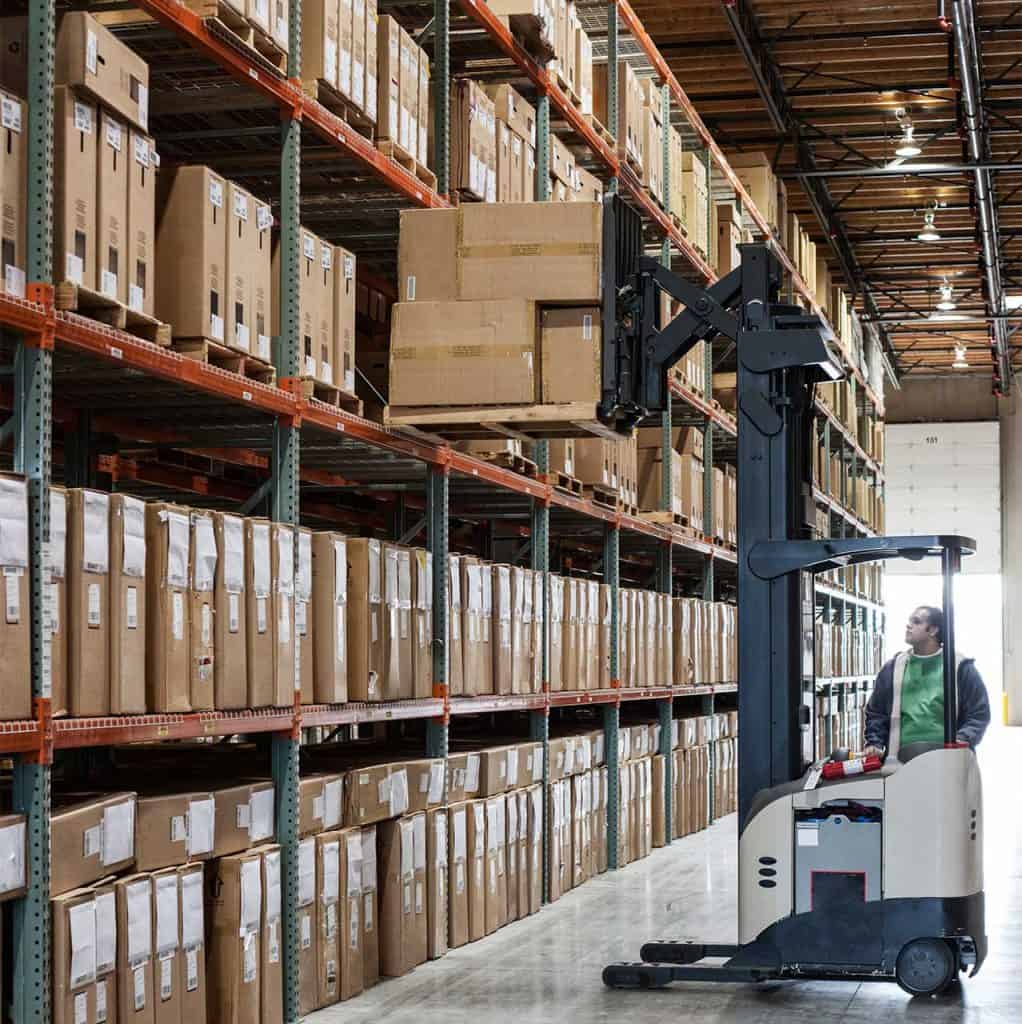
Facing labor and capacity challenges, the industry is increasingly turning to technology for relief. In fact, as of 2024, only about 25% of warehouses worldwide have implemented some form of automation, and a mere 10% utilize advanced automation like robotics or AI. The majority still rely heavily on manual processes, so there is significant room for improvement. Recognizing this, over 60% of warehouses planned to boost their automation budgets heading into 2024, targeting solutions like robotics, automated guided vehicles (AGVs), and AI-driven software. The goal? Alleviate the strain on human workers, increase throughput, and reduce errors and delays.
One area seeing rapid growth is AI in warehouse management. The use of AI-driven systems in warehouse management has surged – by 2024 about 70% of large-scale warehouses had adopted AI-powered solutions to optimize inventory management, forecasting, and even route planning. In practical terms, artificial intelligence is helping warehouse operators predict demand spikes, dynamically slot products for faster picking, and orchestrate complex fulfillment workflows. AI in warehouse management can crunch data from orders, inventory levels, and equipment in real time, then suggest adjustments that improve efficiency. For example, AI algorithms might reorganize pick paths to shorten travel distance or flag anomalies in inventory counts for proactive investigation. The result is data-driven decision making on the warehouse floor – something that was rarely possible in the purely manual era.
Crucially, technology is not replacing humans so much as augmenting them. Automation handles repetitive, dangerous, or extremely time-consuming tasks, which frees up staff for higher-level work and supervision. Many early adopters report not only productivity gains but also safer workplaces – warehouses with advanced automation have seen a 25% reduction in worker injuries on average, alongside double-digit efficiency improvements. In other words, embracing automation can simultaneously improve output and create a better environment for the remaining workforce. For 3PL executives running multiple warehouse sites, these benefits are especially attractive: automation can help standardize service levels across facilities and make scaling up for new client contracts easier.
So what kinds of automation and digital tools are making an impact? Below are a few of the key technology trends reshaping logistics and warehousing today:
Swarms of autonomous robots retrieve and carry storage bins in an automated warehouse. Advanced facilities (like Ocado’s fulfillment centers) use such robotics to achieve high throughput with minimal human labor. These types of “lights-out” warehouse setups – where automation is so extensive that the lights can literally be turned off – are an aspirational goal in the industry. While fully lights-out operations are still rare, many warehouses are steadily moving toward greater autonomy. Even mid-sized operators are deploying simpler automation like conveyors, sortation systems, and smart forklifts in targeted areas to eliminate bottlenecks. Importantly, automation is highly scalable: you can start by automating one or two processes (for instance, installing an automated packaging machine or a pallet shuttle system) and expand as needs grow. This modular approach allows logistics teams to build confidence and ROI step by step.
The future of logistics and warehousing will be defined by those who adapt to these challenges and innovations. The industry’s macro pressures – from labor scarcity to ever-rising service level expectations – aren’t easing up. However, the tools to tackle them are more accessible than ever. Automation and AI are no longer experimental technologies reserved for tech giants; they are practical solutions that even mid-market warehouses and 3PLs can deploy in phases to gain efficiency and resilience. In fact, the global warehouse automation market is projected to reach $35 billion by 2025 as adoption accelerates, and new use cases continue to emerge.
For logistics executives, now is the time to build a roadmap for digital transformation. Start by identifying the pain points in your current operations – is it costly picking processes, inventory inaccuracies, slow throughput, or something else? Chances are, there’s an automation or visibility solution that can help address each one. It could be as straightforward as adding AI vision quality checks at your loading docks to reduce shipping errors, or as ambitious as a fully automated storage and retrieval system in your next warehouse. Even incremental improvements can yield significant gains. Early adopters of warehouse automation have seen an average 20%+ ROI within two years of implementation, thanks to reduced errors, faster order cycles, and lower labor costs.
Ultimately, logistics is a service business – whether you’re a retailer’s distribution center or a 3PL handling clients’ goods, reliability and efficiency are king. Embracing these technologies enables better service: faster shipping, real-time inventory transparency, and fewer disruptions, all of which translate to happier end customers. Major logistics players certainly recognize this; for example, Ryder’s venture capital arm recently invested in Vimaan, a startup offering near real-time inventory visibility through AI-powered computer vision. Moves like that signal how critical digital innovation is becoming for competitiveness in this sector.

The good news is that advancing your warehouse doesn’t have to happen overnight or break the bank. By leveraging a mix of proven solutions (like robotics or better WMS software) and emerging ones (like AI analytics or vision systems), leaders can methodically upgrade their operations and future-proof their supply chain. It’s an exciting time where warehouses are turning into smart, adaptive environments rather than the manual, opaque facilities of the past.