

warehouse insider
Pallet dimensioning systems are automated solutions that measure the length, width, and height of palletized freight (often capturing images as well). Instead of relying on tape measures and manual data entry, these systems use technologies like laser scanners or computer vision cameras to digitize pallet measurements.
Advanced pallet dimensioners can even scan a pallet in motion without requiring a forklift to stop, using drive-through sensor “gates” that instantly record dimensions as the pallet passes through.
For example, Vimaan’s PalletSCAN 3D system employs AI-powered cameras to triangulate a pallet’s exact size in seconds while a forklift simply picks up and drives through the scanning frame. The result is a fast, touchless capture of a pallet’s key data — its dimensions (L×W×H) and volume — with far greater speed and accuracy than any manual measurement.
Critically, many modern pallet dimensioning systems go beyond basic measurements. They integrate high-resolution cameras and barcode readers to gather a 360° view of each pallet, including scannable labels, SKU counts, and even detecting if a load is skewed or has overhang.
In essence, a pallet dimensioner creates a digital fingerprint of every pallet: precise dimensions, barcode data, and photographic evidence, all in one pass. This data is then fed directly into warehouse software systems in real time. In short, pallet dimensioning systems automate a formerly tedious task, making pallet measurement faster, easier, and error-free.

Accurate pallet dimensions might seem like a small detail, but they have outsized impact on supply chain efficiency and cost. In warehouses and distribution centers, knowing the true cubic size of each pallet is vital for space utilization — both in storage racks and in trailers or containers.
When pallet dimensions are wrong (or not tracked at all), companies end up with wasted space: racking slots that are improperly allocated and trucks that ship air. By precisely measuring pallets, warehouses can maximize every cubic foot of space, minimizing empty gaps and avoiding capacity shortfalls. This directly translates to cost savings, as every cubic inch of space counts and impacts shipping costs in freight transport.
Perhaps even more importantly, pallet dimensions drive transportation pricing and compliance. Many LTL carriers and 3PLs base their freight rates on a pallet’s dimensional weight (density) in addition to its actual weight. If a shipper declares dimensions incorrectly — even by a small margin — carrier audits can catch the discrepancy and levy extra fees or reclassify the shipment’s freight class.
Inaccurate pallet measurements thus lead to costly billing disputes and unexpected freight chargebacks. One industry analysis found that roughly 35% of audited pallets are misclassified due to dimensional errors, which can add up to six-figure losses annually in extra freight charges for a moderate shipping volume. In short, bad pallet data means paying more than you should, or scrambling to dispute charges after the fact.
Finally, there are safety and compliance risks. Pallets that are larger than recorded can violate carrier policies or legal limits, putting a company at risk of non-compliance fees. Improperly measured pallets may not fit into standard containers or may cause unsafe stacking and load imbalances. For instance, an undocumented overhang or pallet skew could lead to damage in transit or safety hazards during handling.
Ensuring accurate pallet dimensions (and catching anomalies) is therefore critical for load planning and safe operations. The costs of getting it wrong — from wasted capacity to freight disputes — are simply too high in today’s fast-moving logistics environment.
Transportation Inefficiencies & Wasted Space
Inaccurate pallet dimensions prevent optimal trailer loading and warehouse slotting. Pallets that are larger than expected may not fit, causing last-minute reconfigurations or shipping half-empty trucks. Conversely, understated dimensions lead to unused space that could have been filled. Even small inefficiencies here add up to significant losses in cubic utilization over time.
Higher Shipping Costs & Billing Disputes
When pallet data is wrong, companies often get hit with unexpected carrier fees. If the pallet’s actual size is greater than declared, LTL carriers will re-measure it and apply chargeback penalties. Significant discrepancies can lead to freight reclassification and rebilling. These billing surprises not only erode profit but also strain shipper–carrier relationships as both sides spend time on audits and disputes.
Labor Drain & Slow Throughput
Manual dimensioning is labor-intensive and slow. A worker might spend 2–3 minutes per pallet measuring dimensions, photographing it, and keying in data — during which the forklift and pallet are idled. This stop-and-measure routine creates a bottleneck, reducing dock throughput and tying up skilled labor on a low-value task. Human measurements are also prone to error and often need rechecking.
Compliance and Risk Issues
Inaccurate pallet information can put companies out of compliance with carrier tariffs and even safety regulations. Misreported dimensions might result in shipments exceeding legal load limits or violating “legal-for-trade” requirements. There’s also product damage and safety risk — a pallet loaded improperly (due to bad dimension data) could shift in transit, causing damage or accidents.
Modern pallet dimensioning systems tackle these issues by automating the capture of pallet data with speed and precision. Rather than halting operations to pull out a measuring tape, forklift operators using an automated system like Vimaan’s PalletSCAN simply drive through a scanning portal at normal speed.
In a matter of seconds, an array of sensors and cameras records the pallet’s exact dimensions (even for irregular shapes), without any manual intervention. This means no more “stop and drop” workflow — the forklift keeps moving and the system measures on the fly.
The impact on efficiency is dramatic: dimensioning time can drop from roughly two minutes per pallet to under ten seconds. For busy docks processing hundreds of pallets, this translates to major throughput gains and a less congested receiving/shipping area.
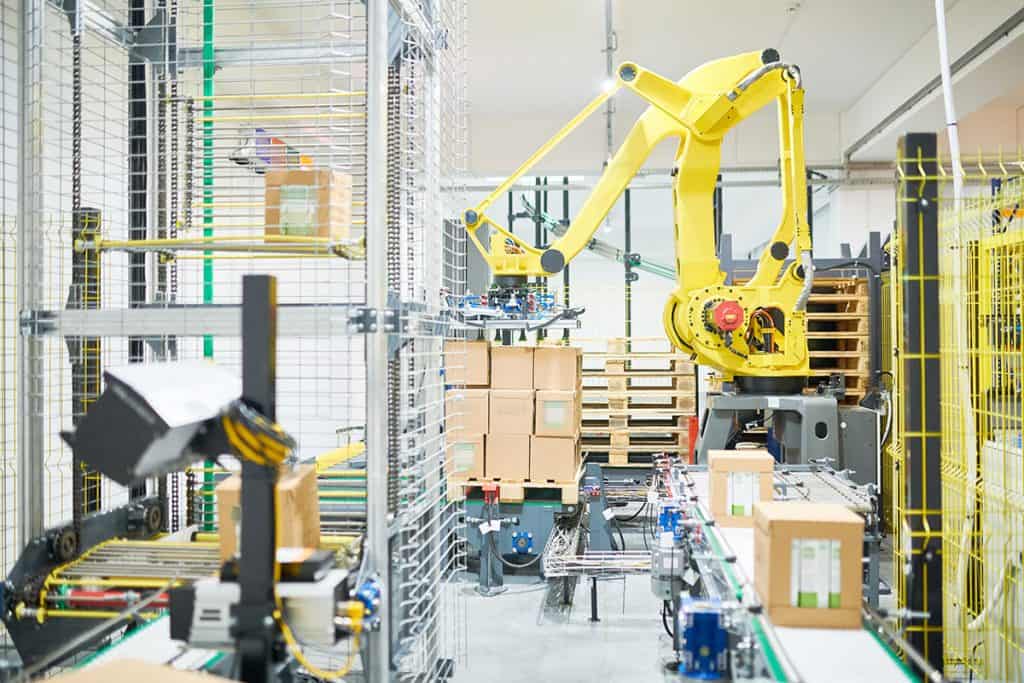
High accuracy is another hallmark. Machine measurements are consistent and millimeter-precise, greatly reducing the errors common with manual methods. Computer vision cameras can distinguish the pallet from the forks and calculate its exact volume in real time, even as the forklift is moving. By removing human guesswork, automated dimensioners ensure every pallet’s specs are captured correctly the first time.
This precision pays off immediately: warehouses have digital proof of each pallet’s true size, along with timestamped imagery, which can be used to reconcile billing questions or claims. In effect, automation not only prevents mistakes — it creates a data trail that builds trust and transparency with logistics partners.
Today’s pallet dimensioning systems also add powerful capabilities: barcode scanning and OCR to read labels and identify SKUs during the dimensioning pass; Ti-Hi (tier and height) counting to verify case counts and stack patterns; and damage detection. A single automated scan can replace multiple manual checks, and the captured images provide a visual record for proof-of-condition or claims — strengthening quality control and reducing labor.
A major advantage is seamless integration with warehouse management (WMS) and transportation management systems (TMS). As soon as a pallet passes through the dimensioner, its data can be pushed to the WMS/TMS in real time, populating the pallet’s record with exact dimensions and images.
This integration turns pallet dimensions into immediate, actionable data:
With trusted dimension data, shippers avoid paying to move empty space, carriers can fit more freight per run, and compliance audits are smoother. Routine re-measures and billing frictions drop when partners trust the measurements.
Within the warehouse, real-time dimension data improves throughput and decision-making — especially for cross-docking, where clean, synchronized data enables faster handoffs from receiving to shipping.

Maximized Cube Utilization
Exact pallet dimensions let you use every inch of storage and trailer space more effectively, cutting transport costs per unit and deferring capex on additional storage.
Cost Recovery & Billing Accuracy
Automated dimensioning ensures billing is based on facts, not estimates. Digital records minimize disputes and speed resolution, improving relationships with carriers.
Higher Throughput with Lower Labor
Eliminating manual measuring and photographing allows teams to process more pallets per hour without adding headcount, while redeploying staff to higher-value tasks.
Stronger Data Confidence & Traceability
Consistent, high-quality dimension data feeds planning, load building, and network analytics. Archived images and measurements create an audit trail for every pallet.
Enhanced Compliance and Customer Satisfaction
Accurate, documented measurements support compliance with carrier requirements, reduce penalties, and improve service reliability — fewer refused loads, delays, or surprise adjustments.
From the warehouse floor to the finance office, pallet dimensioning systems are reshaping supply chain operations by injecting accuracy, speed, and intelligence into a process long plagued by guesswork. Solutions like Vimaan’s PalletSCAN 3D show this isn’t just about measuring pallets — it’s about creating a real-time information flow that benefits the entire network.
When every pallet’s dimensions and images are captured in seconds and shared across WMS/TMS platforms, leaders gain unprecedented visibility and control over inventory and shipping costs. The payoff: better cube utilization, fewer billing disputes, faster throughput, and stronger compliance — all while building a leaner, smarter, more responsive supply chain.