

warehouse insider
In a busy third-party logistics (3PL) warehouse, keeping track of every pallet is a constant challenge. Pallets move in and out rapidly, and without an effective pallet tracking system, it’s easy for inventory records to become inaccurate. In fact, studies have found average inventory accuracy rates in warehouses can be as low as 65%. Problems like missing or misplaced pallets, mis-shipments of the wrong goods, and lack of real-time visibility create inventory inaccuracy that can hurt a 3PL’s pallet tracking system efficiency and reputation. Decision-makers at 3PL providers know that higher warehouse inventory accuracy directly improves operations and customer satisfaction. This blog explores how traditional tracking technologies (like IoT/GPS devices) compare to a new AI-powered computer vision approach in solving these challenges.
Operating a 3PL warehouse means juggling inventory for multiple clients, often with thousands of pallets moving through various locations. Some common pallet tracking system challenges include:
Inventory Inaccuracy: When warehouse stock levels on paper don’t match reality, it leads to inventory shrinkage and order fulfillment errors. The industry considers ~90% accuracy “good” and ~95% world-class, yet a traditional pallet tracking system often struggles to reach even those levels. Inaccurate counts cause stockouts or overstock, and ultimately, lost sales or rushed orders to compensate. An advanced pallet tracking system is necessary to close this accuracy gap and support operational reliability.
Lost or Misplaced Pallets: In a large facility, pallets can get lost within the racks or left behind in staging areas. A pallet that “goes missing” forces workers to waste time searching for or reordering the product. Without a reliable pallet tracking system, lost pallets result in delays and extra costs (e.g., buying replacement pallets or goods). A robust pallet tracking system with real-time visibility reduces search time and prevents misplacement. Lack of visibility can also disrupt the entire supply chain, as one misplaced pallet might delay an outbound truck.
Mis-shipments and Errors: When the wrong pallet is picked or loaded for shipment, it leads to mis-shipments – customers receive incorrect products or quantities. This not only incurs return shipping costs and penalties (like retailer chargebacks) but also damages customer trust. Repeated errors can tarnish a 3PL’s reputation, as frustrated clients may seek more reliable partners. Eliminating mis-shipments is critical for maintaining service quality, and an intelligent pallet tracking system helps prevent these costly mistakes by verifying pallet identity and destination.
Lack of Real-Time Visibility: Many pallet tracking systems still rely on manual scans or periodic cycle counts. This means inventory data is often out-of-date, and managers lack real-time insight into what is happening on the floor. If a pallet is moved to the wrong location or a count error occurs, it might not be detected until the next cycle count or, worse, when an order is missed. A modern pallet tracking system that supports continuous updates is essential for maintaining accurate, up-to-the-minute inventory records. The delay in detecting discrepancies can lead to last-minute scrambling to fix problems.

Labor-Intensive Processes: Traditional tracking often involves labor – workers scanning barcodes or RFID tags or conducting physical counts. Labor is not only costly but also prone to human error. Amid labor shortages and high turnover, 3PLs find it difficult to assign staff to frequent cycle counts or audits. The result is that inventory accuracy suffers due to infrequent checks. A scalable pallet tracking system that reduces manual touchpoints can significantly lower labor demands while improving data quality.
These challenges underscore why a pallet tracking system is top of mind for 3PL executives. In fact, technology investments in inventory tracking have become a high priority for 3PL providers, as they seek to offer near-perfect accuracy as a competitive advantage. Next, we’ll examine how a traditional pallet tracking system attempts to address these issues – and where they fall short.
For years, warehouses have used a mix of methods to track pallets, ranging from simple barcode scans to advanced IoT devices. While each method improves visibility to some extent, they also have notable limitations in a 3PL context. Below, we break down the common categories of a traditional pallet tracking system and their drawbacks:
Most warehouses start with the basics: barcode or QR code labels on pallets that must be scanned at each touch point (receiving, moves, shipping). This type of pallet tracking system is straightforward and low-cost, but heavily reliant on humans scanning correctly every time. Missed scans or data entry errors are common — for example, a forklift driver might forget to scan a pallet when moving it to a new rack location. Such gaps lead to inventory records diverging from reality.
Additionally, barcode-based pallet tracking systems only provide point-in-time updates (when scanned), not continuous tracking. If a pallet is moved or goes missing between scans, the system has no awareness until someone notices and corrects it. These systems lack the ability to validate the pallet tracking system data in real time. Manual processes also make true real-time visibility impossible — you only know what was last scanned, not where things are right now. This leaves significant blind spots in your pallet tracking system workflow.
Radio-frequency identification (RFID) brought a level of automation beyond manual scanning. In an RFID-based pallet tracking system, each pallet (or pallet license plate) is tagged with a small RFID tag, and readers are placed at certain points (like warehouse exits, dock doors, or on forklifts). As tagged pallets pass by a reader, the pallet tracking system logs their movement automatically. This reduces reliance on manual scans and can speed up processes. However, RFID has its own limitations:
Incomplete Coverage: RFID readers typically cover chokepoints, not every inch of the warehouse. If a pallet is misplaced on the wrong shelf, the pallet tracking system might not detect it until a cycle count, since the pallet isn’t moving past a reader. It’s not a truly real-time location system, just an automated logging system at specific points.
Interference and Accuracy Issues: RFID signals can be temperamental — metal racks, liquids, or dense packaging can interfere with reads. Tags may be missed or duplicate-read, leading to data errors. Achieving near-100% read accuracy in your pallet tracking system often requires careful tuning and sometimes multiple reader antennas, which increases complexity.
Tagging Cost: While passive RFID tags are relatively cheap (often <$1 each), tagging every pallet or every item on a pallet may be infeasible for a 3PL handling thousands of transient pallets for various clients. The cost and labor to tag items (especially if clients don’t supply RFID tags on goods) can outweigh the benefits of the pallet tracking system.
Limited Data: RFID can identify a pallet and perhaps some sensor info, but it doesn’t provide what is on the pallet beyond an ID. You still rely on the WMS database for the contents. An RFID-based pallet tracking system won’t tell you if the pallet’s actual content or quantity is different from what’s expected — unless you couple it with manual intervention or weight sensors.
In recent years, some have proposed putting IoT trackers on pallets to know their location at all times. These trackers come in various forms – GPS units, Bluetooth Low Energy (BLE) beacons, ultra-wideband (UWB) tags, Wi-Fi tags, etc. The idea is to attach a small device to each pallet that will transmit its location or presence. In theory, this could provide real-time tracking of assets moving anywhere. In practice, however, an IoT/GPS-based pallet tracking system in a warehouse faces significant hurdles:
Poor Indoor Accuracy of GPS: Standard GPS trackers rely on satellite signals, which do not penetrate well indoors. Warehouse buildings block or reflect GPS signals, so a pallet GPS tracker might only report an approximate position (or no fix at all) when inside. Some hybrid devices switch to indoor positioning (like using Wi-Fi or cellular signals), but those yield coarse accuracy (often 5–10 meters at best indoors under Wi-Fi/BLE). A 10-meter error radius could mean a pallet appearing several aisles away from its true location, which isn’t precise enough for inventory control. For a pallet tracking system to deliver operational value, accuracy is non-negotiable—something GPS alone cannot consistently offer indoors.
Infrastructure and Integration Requirements: Non-GPS indoor trackers (e.g., BLE beacons, UWB tags) require installing a network of receivers or antennas around the warehouse to triangulate tag positions. For example, BLE-based pallet tracking systems use cheap tags on pallets but need many BLE gateways across the facility to listen for those tags. Setting up this Real-Time Location System (RTLS) infrastructure can cost tens of thousands of dollars in hardware and integration. One indoor positioning provider estimates infrastructure can cost $7,500–$10,000 for a ~10,000 sq ft area, plus each tag costs $30–$100 (with sensors and multi-year battery). Besides hardware, the integration complexity is non-trivial: every tag’s ID must be associated with a pallet record in the Warehouse Management System (WMS), and processes are needed to attach, remove, and reuse tags for each pallet or shipment. This adds IT overhead and new operational steps, which can be especially challenging in 3PL environments handling many different customers’ pallets. These layers of complexity reduce the practical scalability of the pallet tracking system.
Lifecycle Cost and Battery Limitations: Attaching a tracker to every pallet is expensive and introduces maintenance overhead. Even if a tracker device has a long battery life (some boast 5–10 year batteries under intermittent use), in a busy warehouse the actual life may be shorter if real-time updates are needed (frequent transmissions drain batteries faster). Eventually, batteries die, and someone must replace or recharge dozens or hundreds of devices regularly – a new kind of maintenance task for warehouse staff. The cost multiplies with scale: a warehouse with 10,000 pallets would need 10,000 devices, plus spares and replacements. Many 3PLs operate on thin margins, so deploying thousands of trackers (and possibly losing some if they depart with outbound shipments) can be cost-prohibitive. For long-term cost control, a pallet tracking system should minimize these maintenance demands.
Limited Indoor/Outdoor Handoffs: IoT trackers do make sense for outdoor yard management or tracking trailers and containers. GPS is great for tracking assets in transit on trucks or in yards with ~10–50 feet accuracy outdoors. They can send alerts if a pallet or container leaves a geofenced area unexpectedly, which helps prevent theft or left-behind pallets during transport. However, once those pallets come inside the warehouse, the same GPS units struggle. Some advanced systems use a combination (GPS outdoors, switch to BLE indoors), but this complexity often means two systems in one, with higher costs and points of failure. A fragmented pallet tracking system architecture like this can introduce more friction than benefit.
In summary, traditional IoT/GPS tracking solutions address only part of the pallet tracking system challenge. They can provide broad location data and help recover missing pallets (especially outside the four walls), but their indoor precision, high deployment cost, maintenance needs, and integration hurdles limit their usefulness for continuous real-time inventory accuracy inside a warehouse. Many 3PLs find that these solutions either don’t scale well or fail to eliminate errors like misplaced stock and mis-shipments.
Even other high-tech approaches like warehouse drones have been piloted to automate inventory scanning, but they revealed practical issues. Fully autonomous inventory drones encounter safety and reliability challenges (e.g., drones can get entangled in stray shrink-wrap or debris, causing crashes), and require constant human oversight. This has led innovators to seek alternative ways to build a pallet tracking system without those pitfalls—one that balances automation, reliability, and long-term cost-effectiveness.
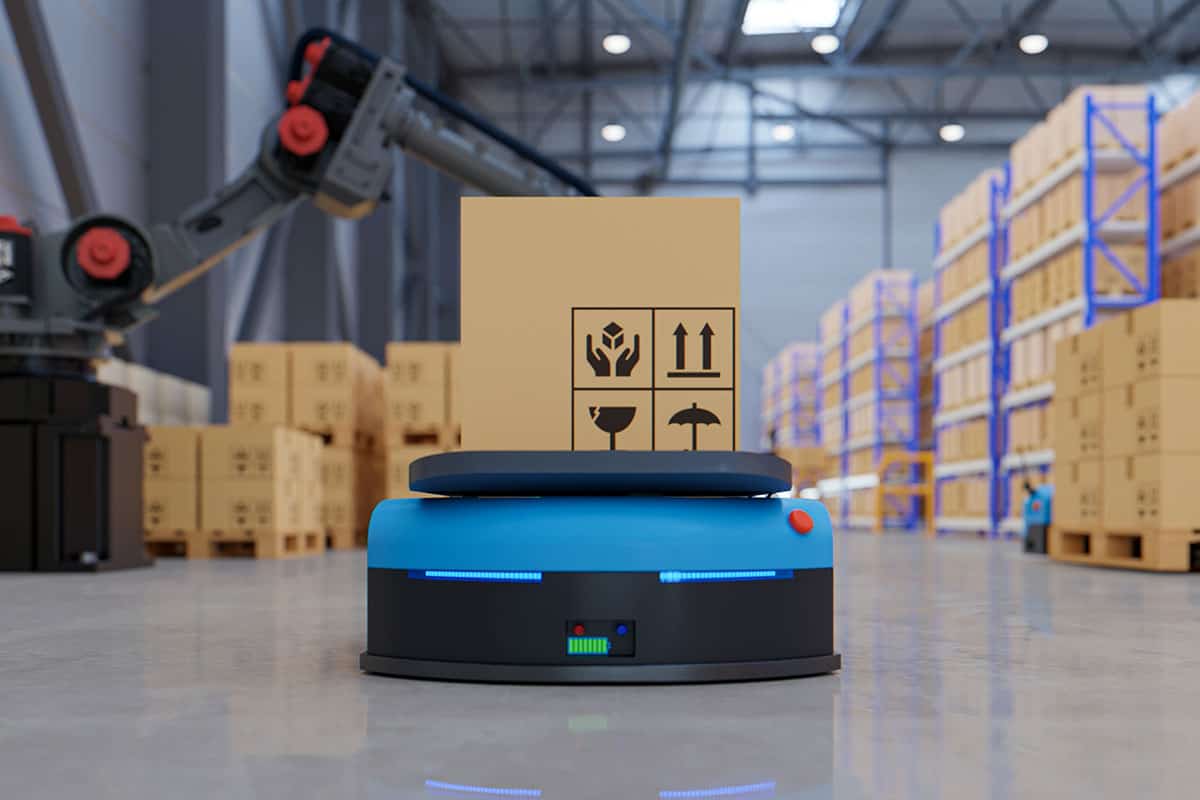
Recent advances in artificial intelligence and camera technology have opened the door to a fundamentally different solution for warehouse pallet tracking: a computer vision-based pallet tracking system. Instead of tagging each pallet with a device, computer vision systems use cameras and AI algorithms to visually monitor and track pallets throughout the warehouse. This approach is exemplified by Vimaan’s StorTRACK system, an AI-powered pallet tracking system designed specifically for warehouses. Here’s how computer vision differs from (and improves upon) traditional tracking methods:
Computer vision can provide ongoing monitoring of inventory within the four walls of the warehouse. For example, StorTRACK uses a set of smart cameras to scan warehouse racks and storage areas continuously or on a frequent schedule. Every pallet’s presence and location on each shelf are digitally captured, so the pallet tracking system “knows” in real time what is stored where. If a pallet is moved, the cameras will notice the change on the next scan – meaning the inventory database is updated much faster than waiting for a human scan or a tracker ping. This delivers true real-time inventory visibility on par with (or better than) active RFID/IoT trackers, but without needing a device on each pallet. With this kind of automation, a computer vision pallet tracking system becomes a cornerstone of warehouse accuracy.
Vision systems can be incredibly precise because they literally see the pallet in its exact location. There’s no signal drift or 10-meter uncertainty – the camera knows which bay and level a pallet occupies. An AI vision platform can even detect if a pallet is misplaced in the wrong location or if the quantity on a pallet looks wrong. In fact, StorTRACK’s AI is capable of detecting miscounted or misplaced items, providing precise insights into what is stored in each location. The result is warehouse inventory accuracy that approaches 99.9%, far beyond what manual or RF-based systems typically achieve. For any 3PL, a pallet tracking system capable of delivering this level of precision is transformative. Early adopters of Vimaan’s computer vision have reached inventory accuracies greater than 99.9% by conducting frequent automated scans. In other words, this advanced pallet tracking system can practically eliminate the discrepancies that were once accepted as normal.
One of the biggest advantages is that you don’t need to tag each pallet with anything. The “eyes” are in the warehouse (cameras and sensors), not on the pallet. This dramatically lowers the ongoing costs – you invest in the camera system once, and it watches all pallets continuously. There are no batteries on thousands of individual trackers slowly dying or needing replacement. The computer vision hardware (cameras or scanner units) can be powered or recharged centrally and maintained far more easily than managing countless distributed devices. This also means no extra weight or gadgets on the pallet, which could be lost or damaged in transit. From a lifecycle cost perspective, a vision-based pallet tracking system can be more cost-effective over time than IoT trackers, especially as warehouse size and pallet volumes grow.
An AI vision solution doesn’t just tell you where a pallet is – it can tell you a lot about the pallet itself. For instance, StorTRACK doesn’t merely track location like a GPS dot on a map; it also validates what’s on the pallet by reading labels or counting items, and even inspects for issues. The pallet tracking system can generate alerts for discrepancies (e.g., if the WMS thinks 10 units are on a pallet but only 8 are visually present) and flag quality problems like damaged pallets or packaging. It essentially delivers the ground truth of inventory to the WMS, functioning as more than a tracker – rather, an automated inventory audit platform. This rich data helps 3PLs catch errors early (before a mis-shipment occurs) and maintain strict accuracy. Few technologies offer this level of actionable insight in a pallet tracking system without added manual effort.
Cycle count automation is a huge benefit of computer vision. Traditionally, cycle counting (periodically counting a subset of inventory) is labor-intensive, so many warehouses do it only monthly or quarterly. StorTRACK and similar solutions enable high-frequency cycle counts – even as often as once a week in some deployments – with minimal labor. A device like StorTRACK can be mounted on a forklift or an MHE vehicle to scan entire rack sections quickly, capturing all pallet positions and IDs as it goes. This means warehouses can validate their inventory constantly without interrupting operations or paying staff overtime for counts. The automated scans are faster and safer (no climbing ladders or using cherry pickers for high shelves). As a result, discrepancies are caught and corrected sooner, leading to near-perfect accuracy and audit-readiness at any time. One 3PL reported a 40× increase in cycle counting productivity after using this type of pallet tracking system, along with a doubling of inventory accuracy in weeks.
Modern vision-based tracking systems are designed to plug into existing warehouse processes. For example, StorTRACK integrates with major WMS software, feeding it the updated inventory positions and any discrepancy alerts. The pallet tracking system can be deployed with minimal changes to how the warehouse operates – cameras or scanners are added to the environment, but workers can mostly continue their normal routines. Vimaan explicitly designed its solutions to require little to no infrastructure changes or retraining for staff. This contrasts with some IoT solutions that might require extensive IT projects or new procedures for tag management. In short, a vision-powered pallet tracking system can slide into the existing workflow relatively seamlessly, accelerating ROI. Facilities using StorTRACK have seen a return on investment in a matter of months, not years, thanks to the efficiency gains and error reduction.
Because a vision system knows exactly what each pallet is and where it’s supposed to go, it greatly reduces the chance of sending the wrong pallet out to a customer. For instance, at shipping time, cameras can verify the pallet ID and contents against the order before loading. This validation step can eliminate mis-shipments by catching any mistakes (such as a pallet being loaded on the wrong truck) in real-time. Furthermore, the constant monitoring means if an item was put away in the wrong slot, it will be identified and corrected long before it becomes a shipping error. The overall reduction in errors has a direct impact: fewer customer claims and chargebacks, and virtually no surprises when performing final shipments. According to Vimaan, their clients leverage such vision solutions to reduce mis-shipments and improve order accuracy, delivering near 100% order fulfillment accuracy in practice. In a 3PL setting, a pallet tracking system with this kind of validation capability translates to happy clients and protection against costly penalties.
When researching a pallet tracking system for your 3PL warehouse, it’s important to weigh the pros and cons of each technology. A well-chosen pallet tracking system can improve everything from inventory accuracy to customer satisfaction. Traditional IoT and GPS-based trackers offer mobility and can be useful for outdoor tracking, but inside the warehouse, they often fall short on accuracy and cost-effectiveness. These types of pallet tracking systems tend to address symptoms (e.g., “where is pallet X?”) but not the entire problem of data accuracy and process integration.
On the other hand, AI-powered computer vision solutions represent a leap forward in inventory tracking. A computer vision-based pallet tracking system tackles longstanding challenges with a fresh approach, eliminating blind spots and significantly reducing manual labor. It enables precise, real-time visibility into pallet locations and contents without needing to attach devices to every load.
For 3PL decision-makers, an educational, top-of-funnel takeaway is this: improving warehouse inventory accuracy and visibility isn’t just about slapping trackers on assets; it’s about rethinking how your pallet tracking system captures truth on the warehouse floor. Computer vision pallet tracking systems like Vimaan’s StorTRACK deliver that truth by seeing every pallet, continuously and without human error.
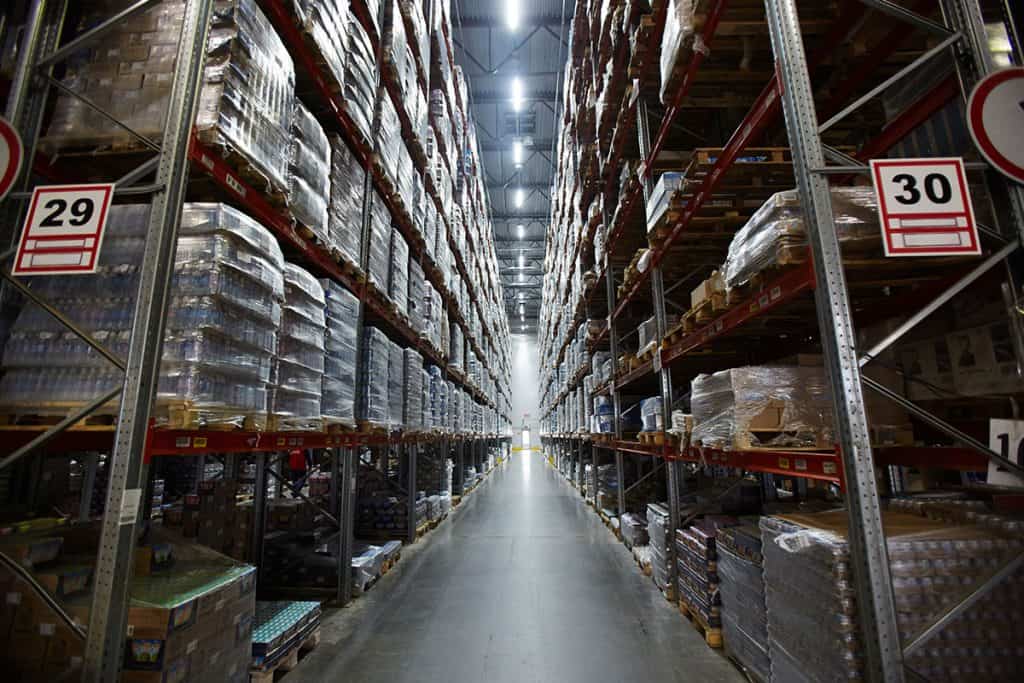
These systems provide the real-time, granular visibility that 3PLs need to operate efficiently and keep customers happy. And they do so in a way that aligns with the 3PL’s needs — customer-focused, honest in the data delivered, and technologically robust without being cumbersome. When evaluating your next pallet tracking system, prioritize accuracy, automation, and long-term scalability — traits that define the next generation of warehouse intelligence.
By comparing your options through this lens, you can make a technically informed decision. A pallet tracking system powered by AI vision can help your warehouse achieve near-perfect inventory accuracy, automate cycle counts, and eliminate mis-shipments, all while reducing labor and integration headaches. In an industry where margins are thin and trust is paramount, investing in such a solution can elevate your 3PL operations from reactive and error-prone to proactive and 99.9% accurate. The technology is here today, and as many forward-thinking 3PLs have found, it’s a game-changer for warehouse inventory management.
By understanding these points, you can make an informed decision on the pallet tracking system technology that best fits your warehouse. The goal is to achieve the holy grail of warehouse inventory accuracy (99%+), and a modern pallet tracking system powered by computer vision are proving to be the key to reaching that goal.