

warehouse insider
Creating an accurate parcel-level record while validating diverse items against the expected order, shipment, or return
The core challenge
Mixed-SKU flows combine unlike parcels, inconsistent labels, and multiple item identities in one processing stream. If each parcel cannot be correctly identified, normalized, and compared with the expected transaction, higher speed simply moves errors downstream faster.
Distribution, repair, returns, freight, and fulfillment operations routinely process mixed streams of parcels. Items may arrive floor-loaded, be destacked from mixed pallets, or be assembled from multiple storage areas for outbound shipment. Package size, product family, label format, and the identifier used by the business can differ from one parcel to the next.
Vimaan’s ParcelSCAN digitizes each parcel as an individual event, extracts configured identifiers and visible attributes, and compares the resulting record with an expected order, shipment, ASN, manifest, or RMA. The operation gains a running view of what has been processed, what remains outstanding, and which parcels require review – with images and data retained for traceability.
What This Application Addresses
Why Individual Scans Do Not Automatically Prove a Complete Transaction
A mixed-SKU workflow is not simply a faster version of single-barcode scanning. The operation must identify unlike parcels, interpret different external and internal labels, preserve each physical parcel’s identity, and reconcile the complete stream against a shared business record.
Three linked failure points
1. Parcel identity is not standardized.
One parcel may be represented by a carrier tracking number, another by an RMA, supplier carton ID, product number, OEM serial, or internal label. Multiple labels may remain from earlier life cycles, and the correct field may appear on any visible face.
2. A series of successful reads is not the same as a validated order.
The workflow must determine whether every expected parcel or item has been processed, whether an unexpected item entered the stream, and whether a unique parcel was scanned twice. These decisions require transaction context, not isolated reads.
3. Added process steps can break the parcel association.
Dimensions, weight, RFID, label printing, verification, and routing are valuable only when their outputs remain bound to the correct physical parcel event. Poor triggering or tracking can combine valid data from different parcels.
A readable barcode is not the final business outcome
The real control point is a defensible association among the physical parcel, the selected identity, the expected transaction, any measurements or labels created, and the final disposition.
Common operational consequences
From Unlike Parcels to One Reconciled Processing Record
ParcelSCAN supports a controlled workflow in which each parcel is captured once, translated into a common event record, and compared with the active business transaction. Exact ownership varies by deployment: ParcelSCAN may provide images, barcode and OCR outputs, label location, dimensions, and verification results while a WMS, ERP, WES, or integrator owns order logic, label creation, conveyor control, and posting.
| Step | Control | What happens |
| 1 | Load | Open the expected order, shipment, ASN, manifest, or RMA record. |
| 2 | Induct | Present parcels individually from a trailer, pallet, cart, or process lane. |
| 3 | Capture | Image visible faces and collect configured barcode, OCR, RFID, logo / symbol, dimension, or weight data. |
| 4 | Identify | Select the authoritative parcel or item identifier using defined rules. |
| 5 | Normalize | Translate varied supplier, carrier, or internal fields into a common validation record. |
| 6 | Compare | Reconcile each parcel event with the expected transaction and running totals. |
| 7 | Resolve | Hold unreadable, ambiguous, unexpected, or duplicate events for controlled review. |
| 8 | Release | Post validated results, route the parcel, and preserve the image and data record. |
The comparison rules matter as much as the capture
Rules may vary by supplier, carrier, item family, customer, or process. They define which field is authoritative, how external identifiers map to internal records, whether a value is expected to be unique, and when the transaction is considered complete. Repeated SKU values should not be treated as duplicates unless a unique parcel or serial identifier is also present; otherwise, the process must evaluate parcel events and expected quantities together.
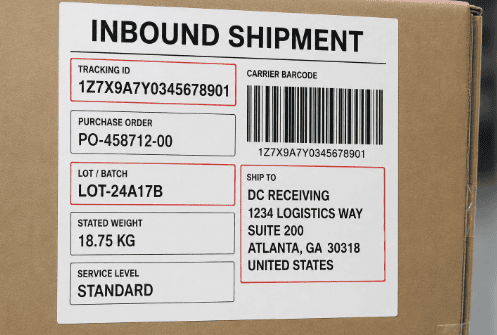
What ParcelSCAN Contributes to Mixed-SKU Processing
Building a Common Validation Record from Unlike Parcels
ParcelSCAN can capture the visible information available on each package, even when that information is not presented in a common label template. A receiving parcel may be identified by an RMA or supplier reference; an outbound parcel may require an internal tracking number, item identifier, dimensions, weight, and carrier label. The configured workflow converts those different inputs into a consistent parcel event.
Two capabilities make the mixed-SKU process usable at transaction level:
This allows one station to process different parcel identities without forcing every supplier, carrier, or product family into the same external label design. The rules still need to be explicit: automation should hold an event whenever identity, expected quantity, or match confidence is uncertain.

Integration and ownership boundaries
The solution can exchange data through APIs, messages, or file-based interfaces depending on the surrounding architecture. Before deployment, ownership should be defined for transaction selection, parcel triggering and tracking, identifier rules, expected-record lookup, comparison logic, measurement devices, label generation, routing, exception resolution, and final posting.
ParcelSCAN can operate as the parcel digitization and validation layer while the warehouse platform or system integrator retains business transactions and material-handling control. This keeps customer-specific order and disposition rules in the systems best equipped to manage them.
Exception handling is part of the production workflow
| Exception | Controlled response |
| No readable identifier | Retain the parcel images, retry alternate views, or route to operator review without assigning an uncertain identity. |
| Multiple candidate identifiers | Apply label-of-interest rules; if ambiguity remains, present the candidates and hold the event for confirmation. |
| No expected-record match | Keep the parcel in an unmatched queue and prevent automatic posting to the active transaction. |
| Unexpected parcel or item | Record the event separately and route it according to the customer’s overage, wrong-item, or unknown-item process. |
| Repeated unique identifier | Block or flag the second event when a parcel, serial, or tracking identifier is expected to occur only once. |
| Expected item still missing | Keep the transaction open or require authorized closure with a documented shortage or exception reason. |
| Measurement or peripheral failure | Preserve the parcel association and divert for remeasurement, relabeling, or controlled manual completion. |
| Verification or routing failure | Do not release the parcel automatically until the expected label, output, or destination is confirmed. |
Visible-data and association boundary
ParcelSCAN validates exterior information and data associated with the parcel event. If required part, serial, country-of-origin, or quantity information is sealed inside a carton, it must be exposed through an external label, a trusted upstream association, an RFID read, or a defined open-carton exception.
Configuring the Same Core Platform for Different Process Flows
Inbound receiving and returns
Parcels can be unloaded from a floor-loaded trailer or destacked from mixed pallets, presented individually, and reconciled with an expected receipt or RMA. The workflow may add an internal tracking label, RFID association, destination assignment, or operator-directed exception step before putaway or repair processing.
Outbound order and shipping validation
Picked or repaired units can be processed against an active order, with configured identifiers, dimensions, and in-line weight captured before the carrier label is generated or verified. The order remains open until required items are accounted for or an authorized exception closes it.
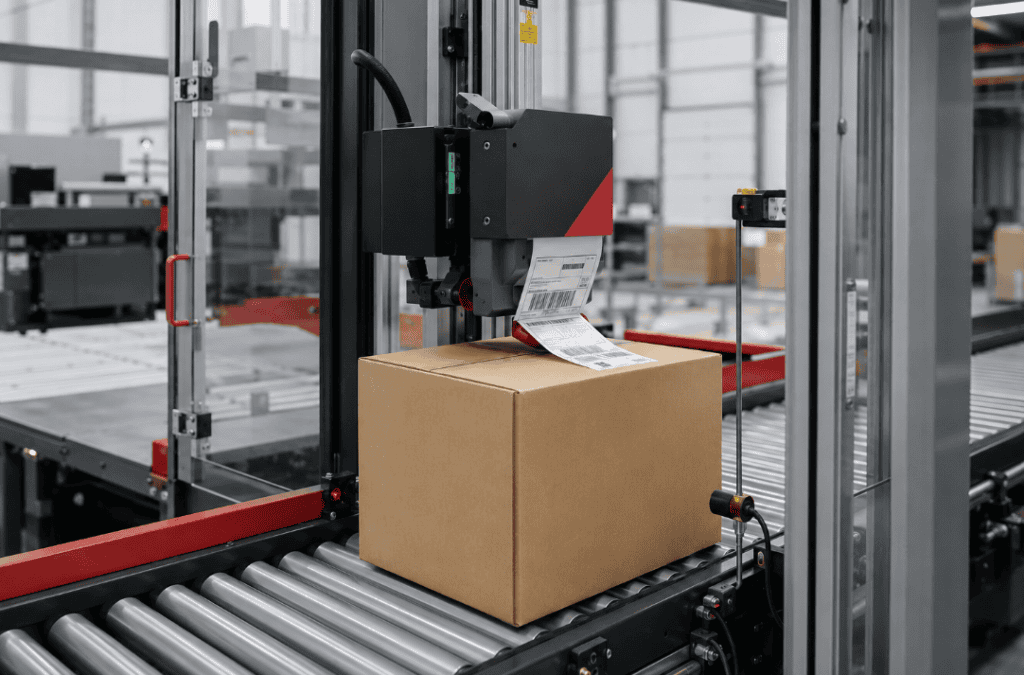
Shared or dedicated stations
A common ParcelSCAN hardware configuration can support multiple workflows when parcel size, speed, capture coverage, and scheduling are compatible. Dedicated receiving and shipping lanes may still be preferred for concurrency, redundancy, or different peripheral equipment. These are operational design choices rather than separate vision platforms.
Rules to define before production
Expected operational value
Mixed-SKU parcel processing is not solved by reading more barcodes alone. The operation must turn unlike packages and labels into consistent parcel events, associate each event with the correct business transaction, and determine when the complete order, shipment, or return is valid.
ParcelSCAN provides the imaging, data capture, and validation layer needed to make that process repeatable. Combined with explicit identifier rules, reliable parcel tracking, and clear system ownership, it allows high-volume mixed-SKU flows to move faster without sacrificing control or traceability.
Q1. What does mixed-SKU parcel processing mean?
It is the processing of a parcel stream containing different products, packaging formats, label designs, and identifier types. The parcels may belong to one order or return batch, or may represent several transactions moving through a shared station. The system must identify each parcel correctly while maintaining the appropriate transaction context.
Q2. How is this different from standard barcode scanning??
A standard scanner returns the code it sees. Mixed-SKU validation must determine which visible code matters, map different formats into a common record, compare each parcel with expected data, maintain running completion status, and control exceptions. The result is a validated transaction rather than a list of reads.
Q3. Can ParcelSCAN handle multiple labels on the same package?
Yes. ParcelSCAN captures visible barcodes and text from configured parcel faces, then applies deployment-specific rules to identify the relevant label or field. If more than one candidate remains plausible, the event can be held for operator confirmation instead of forcing an uncertain match.
Q4. How does ParcelSCAN compare parcels with a WMS or ERP order?
The surrounding system supplies or exposes the expected order, shipment, ASN, manifest, or RMA data. ParcelSCAN returns the configured identity and parcel-event data for comparison, or participates in an integrated workflow where running match status is presented in ViewDECK or the customer system. Exact ownership of lookup, comparison, and posting is defined during integration.
Q5. Can the system detect missing, unexpected, or duplicate parcels?
Yes, when the expected transaction and identifier rules provide enough information. Unexpected items can be flagged when they do not match the active record. Missing items are identified when expected quantities or unique records remain unfulfilled at transaction close. Duplicate detection requires an identifier expected to occur only once; repeated SKU values alone may represent legitimate quantities.
Q6. Does ParcelSCAN eliminate the need to open every carton?
ParcelSCAN can validate exterior labels and associated data. A carton may remain closed when required part, serial, quantity, or country-of-origin information is available on the exterior, through a trusted upstream association, or through a readable RFID tag. If essential data exists only inside the carton, the process still needs an open-carton or other controlled exception.